The Real Surveillance Horror Story Isn't Catching Criminals — It's Power Following Whoever It Wants
THE REAL SURVEILLANCE HORROR STORY ISN’T CAMERAS CATCHING CRIMINALS. IT’S PEOPLE WITH POWER USING “PUBLIC SAFETY” TO FOLLOW WHOEVER THEY WANT. Police surveillance is usually sold to the public with one comforting promise: this technology is here to protect you.
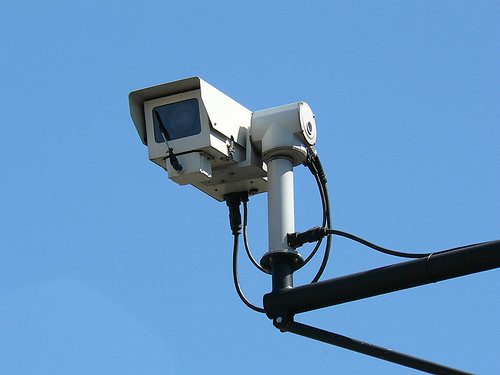
License plate readers, like Flock cameras, are marketed as tools to find stolen cars, catch dangerous suspects, and help locate missing people. And yes, sometimes they do exactly that. But the terrifying part begins when the same technology built for public safety becomes a personal weapon in the hands of the people trusted to use it responsibly.
According to the article, a police chief in Illinois was arrested after prosecutors alleged he used a Flock license plate reader system and a state police database to track people he personally knew. Not suspected criminals. Not dangerous fugitives. People from his private life.
Three of them were women he had dated.
Another was reportedly a romantic rival.
Let that sink in: a police chief, one of the highest-ranking people in local law enforcement, allegedly used surveillance tools not to protect the public, but to monitor personal relationships.
This is not “one bad search.”
This is not “a small mistake.”
This is not “technology being misunderstood.”
This is power being used to stalk.
The article says the misconduct lasted around 18 months. One man’s plate was searched more than 100 times, with many searches allegedly happening while the officer was off duty. That means this was not a quick emergency decision. It was a pattern. A repeated choice. A quiet abuse of access.
And that is exactly why this story matters.
Flock says its system tracks vehicles, not people. But that sounds less convincing when officers are allegedly using a vehicle’s plate to find where a specific woman goes, who she visits, where she lives, and when she moves. The car may be the object in the database, but the person is the real target.
A license plate is not just metal and numbers. It is a digital leash attached to a human life.
When a police officer searches a plate again and again, they are not just learning where a car has been. They are learning someone’s routine. Their habits. Their relationships. Their private world. They can see patterns that reveal where a person sleeps, works, worships, studies, receives medical care, or meets someone they love.
That is not just data.
That is intimacy.
And when surveillance becomes intimate, abuse becomes inevitable unless there are real limits.
The most disturbing part is that this is not only about one police chief. The article describes a wider pattern across the country: officers using license plate reader systems to track ex-girlfriends, spouses, romantic rivals, and people connected to their personal lives. In some cases, the abuse was discovered only after the damage had already happened.
That is the problem with “internal safeguards.” They usually arrive too late.
A policy does not protect someone if nobody checks before the search happens.
An audit does not protect someone if it only finds the abuse months later.
A disciplinary rule does not protect someone who has already been watched, followed, threatened, or intimidated.
This is why warrants matter.
A warrant is not an attack on public safety. It is a pause button. It forces the government to explain to a judge why it needs to search someone’s stored location history. It creates a record. It adds a person outside the police department into the decision.
In emergencies, police can still act quickly. If someone is kidnapped, if a suspect is fleeing, if lives are at risk, the law already allows urgent action. The argument is not that police should be helpless. The argument is that routine searches of stored location data should not happen just because an officer is curious, jealous, angry, or obsessed.
We already understand this with other powerful technologies.
Police generally need warrants for GPS tracking. They need warrants for historical cell phone location data. They need warrants for wiretaps. Why? Because these tools reveal too much about a person’s life to be used casually.
License plate readers can reveal the same thing.
Maybe even more.
They can create a map of everywhere someone goes, day after day, without that person ever knowing they are being watched.
And here is where it gets uglier: the people accused in some of these cases are not random beginners who “didn’t know the rules.” Some are police chiefs. Leaders. Supervisors. The people who write policies, train officers, and are supposed to enforce accountability.
If the people at the top can misuse the system, then the system is not safe enough.
This is not just a privacy issue. It is a stalking issue. A domestic abuse issue. A gendered power issue. A public trust issue.
Because when surveillance tools are misused in romantic or personal situations, women are often the ones who pay the price. A jealous officer with access to location data is not just a bad employee. He is a threat with a badge, a database, and the power of the state behind him.
That should scare everyone.
The real scandal is not that license plate readers exist.
The real scandal is that a government tool can follow someone’s movements without a judge ever being asked whether that search is justified.
The real scandal is that companies can call this “innovation,” police departments can call it “safety,” and victims are left hoping someone notices the abuse after it has already happened.
So the question is simple:
If a camera network can track where you go, store your movements, and let an officer search your life with no warrant, who is actually being protected?
Because from here, it looks like public safety is being used as the excuse, surveillance is being used as the weapon, and ordinary people — especially women — are being asked to trust the same system that keeps proving it can be abused.
Discuss: Is this a technology problem, a police accountability problem, a privacy problem — or is it finally time to admit that surveillance without warrants is power without permission?